
Choose the right glycol
Glycol is a raw material with a high boiling point and a relatively low freezing point. Combined with water and anti-corrosion additives, glycol becomes an effective coolant used in cars and other motor vehicles.
|
Not all types are the same, and it is important to know which glycol is right for the vehicle. Arom-dekor has developed several types of glycol and also offers ready-mixed coolants. This article explains the differences between the types of glycol in our range and how to choose the right one. |
Buy the right glycol for your vehicle
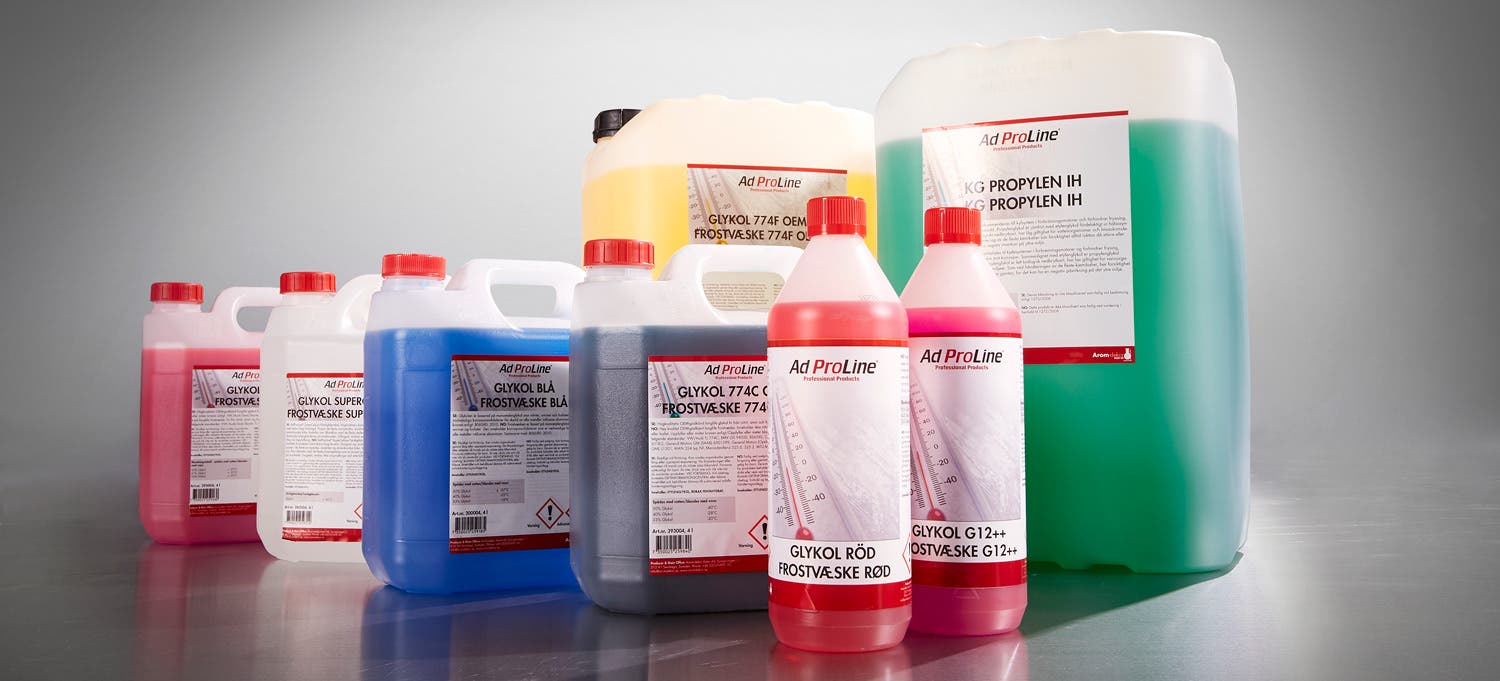
Arom-dekor offers a wide range of glycol products in which most customers can find the right option for their vehicle. With many different pack sizes to choose from, it is easy to buy what suits your needs. To find out which glycol is suitable, check the vehicle’s instruction manual or owner’s handbook and compare it with our glycol range (Swedish).
Arom-dekor is a leading supplier of vehicle chemicals to the Nordic transport sector. In addition to glycol, we offer products including AdBlue® (Swedish), degreasers (Swedish), cleaning products (Swedish) and windscreen washer fluid (Swedish). We manage the entire chain from production to delivery, giving us full control over the quality of our products.
Glycol in different colours and types, propylene glycol and ethylene glycol
In general, either ethylene glycol or propylene glycol is used as a raw material in coolant, combined with different inhibitor packages to provide corrosion protection. Ethylene glycol is the most common, but is very toxic. Propylene glycol has lower toxicity and therefore more favourable health and environmental properties. This is why propylene glycol is often used in forestry machinery, for example, where particular requirements apply to these factors. No general distinction between glycols can be made based on colour, such as red or blue. The colour is simply an additive and does not guarantee function or quality. For example, both blue and red glycols can be high- or low-quality products regardless of their colour.
Which glycol should you use?
It is important to use the right type of glycol for the vehicle and its system. So how do you find out which glycol to use for your vehicle? Check the vehicle’s instruction manual or owner’s handbook. The glycol specified there is known as original glycol or OEM glycol (Original Equipment Manufacturer). This is what the vehicle manufacturers themselves use in the factory.
Information about which glycol to use may appear in different sections of the instruction manual or owner’s handbook, for example under headings such as:
- How to top up the coolant
- Technical specifications
- Recommended fluids
One reason why choosing the right glycol is important is to select coolant containing the type of corrosion-inhibiting additives that best protect the metals in your vehicle. Therefore, follow the instructions in the instruction manual or owner’s handbook when choosing glycol for the best results.
Glycol, freezing point and boiling point
Ethylene glycol and propylene glycol are raw materials used in coolant, among other applications, and have several functions. One is to lower the freezing point; another is to raise the boiling point. Corrosion-inhibiting additives are needed to protect the system against corrosion (rust).
Mix glycol with water
Concentrated glycol should never be used without first being diluted with water. The recommendation is to use deionised water, also known as battery water, rather than ordinary tap water. Tap water can contain chlorides, for example, which can adversely affect the system.
Glycol should be diluted because it cools much less effectively in concentrated form. Water is the best liquid for carrying away excess heat. Water alone is not used as coolant because of the risk of freezing in winter and boiling (overheating). It would also provide no corrosion protection.
Ready-mixed coolant that has already been diluted with water is also available to buy.